





New CTE Study in Former NFL Players: What Parents and Athletes Should Know
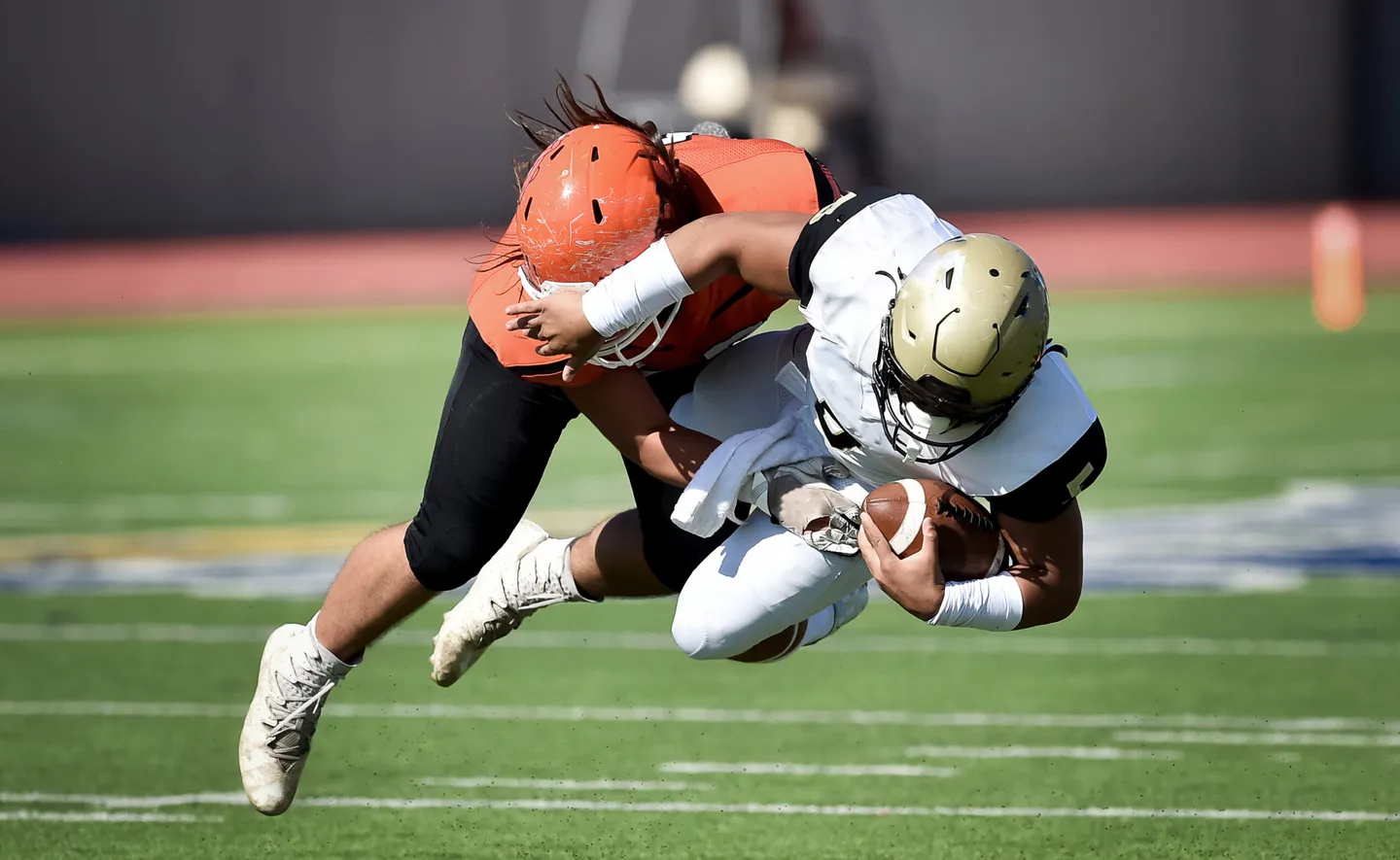
If you've seen the recent headlines about chronic traumatic encephalopathy (CTE) in former NFL players, you may be worried, especially if your child has had a concussion or plays a contact sport. These concerns make sense. In this post, our concussion specialist walks through what the new research found, what it doesn't tell us, and what it means for your child.
What the New Study Found
In October 2026, researchers published a study in JAMA Network Open (Gallini et al., 2026). It estimated that about 75% of former NFL players who died between 2008 and 2023 had CTE neuropathology (signs of the disease in brain tissue).
Past CTE research has been criticized because the brains studied were mostly donated by families of players who had symptoms while alive. The new study tried to correct for this selection bias. It combined brain donation data with death records for 2,362 deceased former NFL players (396 brain donors, 1,966 nondonors). The authors concluded that selection bias does inflate estimates based on donors alone, but that it probably does not fully explain the high rate of CTE in this group.
CTE Is Real, and It Deserves More Research
CTE is a real pathology. It has been found in people with a significant amount of exposure to repetitive head impacts, and right now it can only be confirmed after death. The study authors say more research is needed to understand how the disease affects people clinically. Taking CTE seriously and keeping things in perspective can go together.
Why NFL Findings Don't Predict Your Child's Future
Former NFL players are a very unique group. The researchers themselves stressed that the estimate applies only to deceased former NFL players. It does not predict how common CTE is in living or current players. It also does not address college, high school, or youth players.
Exposure matters. NFL players spend many years absorbing thousands of hits at the highest level of play. Most children who play a few seasons of youth or high school sports never come close to that level of exposure.
Data from broader populations is reassuring. In a large study, men who played high school football in Wisconsin in the 1950s did not have worse cognitive or mental health outcomes later in life than men who did not play (Deshpande et al., 2017). Additionally, in a Mayo Clinic brain bank of individuals with neurodegenerative disorders, CTE was not found in any of 198 individuals without contact sport exposure, including 33 people who had a single traumatic brain injury (Bieniek et al., 2015).
A concussion is not CTE. CTE may be associated with repetitive head impacts over time. It is not a known consequence of a single, well-managed concussion.
Brain Findings Are Not the Same as Symptoms
People often miss this point: pathology is not the same as clinical presentation. Finding CTE changes in brain tissue does not tell us whether that person had symptoms during life, or what kind.
- In the new NFL study, the authors noted that many cases may have been early stage and possibly symptom free. It is also not yet clear which, if any, symptoms are caused by CTE and which come from other conditions that often occur alongside it (Gallini et al., 2026).
- A 2023 study looked at young athletes who died before age 30. Those with CTE and those without it had no differences in clinical symptoms or cause of death. Symptoms such as depression, apathy, and difficulties with decision making and behavioral control were common in athletes with and without CTE (McKee et al., 2023), which suggests these symptoms are likely due to multiple factors, often including treatable causes.
This matters for families. If someone has mood, memory, or attention concerns after head injuries, those concerns deserve careful evaluation. They should not simply be assumed to be CTE. Anxiety, depression, sleep problems, ADHD, and lingering concussion symptoms can all be identified and treated.
The Good News About Concussion Recovery
- Teen athletes often recover within weeks. A systematic review and meta-analysis found that high school athletes reported symptoms resolving at about 15 days on average, with cognitive recovery within about 7 days (Williams et al., 2015).
- Concussion care is guided by evidence. The latest international consensus statement on sport-related concussion recommends a gradual, supervised return to learning and sport (Patricios et al., 2023).
- Early activity helps. Children and adolescents who returned to light physical activity within 7 days of a concussion had a lower risk of persistent symptoms than those who rested strictly (Grool et al., 2016).
Practical Steps for Parents and Athletes
- Remove from play when concussion is suspected. Athletes should not return to play on the same day as a suspected concussion.
- Get a timely evaluation from a provider trained in concussion care.
- Follow a gradual return-to-learn and return-to-sport plan under the care of a medical professional instead of strict, prolonged rest.
- Pay attention to lingering symptoms. Symptoms that last beyond a few weeks deserve follow-up. Targeted care can help.
How Horizon Neuropsychological Services Can Help
Our Concussion Clinic offers evidence-based evaluation and individualized recovery plans for children, teens, and adults. We help guide a safe return to school, sport, activities, and work, and can identify other treatable causes of symptoms. We serve families at our Littleton and Boulder locations and through telehealth.
Worried about a recent concussion or lingering symptoms? Contact Horizon Neuropsychological Services today at 720-242-7533 to schedule an appointment at our Concussion Clinic.
This article is for educational purposes and is not a substitute for individualized medical advice.
References
Bieniek KF, Ross OA, Cormier KA, et al. Chronic traumatic encephalopathy pathology in a neurodegenerative disorders brain bank. Acta Neuropathol. 2015;130(6):877-889. doi:10.1007/s00401-015-1502-4
Deshpande SK, Hasegawa RB, Rabinowitz AR, et al. Association of Playing High School Football With Cognition and Mental Health Later in Life. JAMA Neurol. 2017;74(8):909-918. doi:10.1001/jamaneurol.2017.1317
Gallini J, Alosco ML, Abdolmohammadi B, et al. Bias-Adjusted Prevalence of Chronic Traumatic Encephalopathy Among Deceased National Football League Players. JAMA Netw Open. 2026;9(10):e2640884. doi:10.1001/jamanetworkopen.2026.40884
Grool AM, Aglipay M, Momoli F, et al. Association Between Early Participation in Physical Activity Following Acute Concussion and Persistent Postconcussive Symptoms in Children and Adolescents. JAMA. 2016;316(23):2504-2514. doi:10.1001/jama.2016.17396
McKee AC, Mez J, Abdolmohammadi B, et al. Neuropathologic and Clinical Findings in Young Contact Sport Athletes Exposed to Repetitive Head Impacts. JAMA Neurol. 2023;80(10):1037-1050. doi:10.1001/jamaneurol.2023.2907
Patricios JS, Schneider KJ, Dvorak J, et al. Consensus statement on concussion in sport: the 6th International Conference on Concussion in Sport, Amsterdam, October 2022. Br J Sports Med. 2023;57:695-711.
Williams RM, Puetz TW, Giza CC, Broglio SP. Concussion recovery time among high school and collegiate athletes: a systematic review and meta-analysis. Sports Med. 2015;45(6):893-903. doi:10.1007/s40279-015-0325-8